
Technical documents
Technical Documentation

Google Cloud FinOps in Practice: Cost Visualization, Anomaly Detection, and Optimization Architecture Based on BigQuery Billing Data Analysis
To solve issues like cross-label allocation and SKU-level root cause identification—which are difficult with the standard billing console—we explain a FinOps architecture based on BigQuery billing exports. We systematically organize the use of three tables, SQL for net cost aggregation and moving average anomaly detection, and strategies to suppress scan costs.

Practical Quality Assurance in AI Development: Design Points for 6-Axis Critical Review and Zero-Defect Convergence Loop
This article explains 6-axis quality verification, which prevents AI review's sycophancy bias and over-engineering, prioritizing security and cost optimization, along with design points for a P0/P1=0 convergence loop. Prompt samples immediately usable in practice are also included.
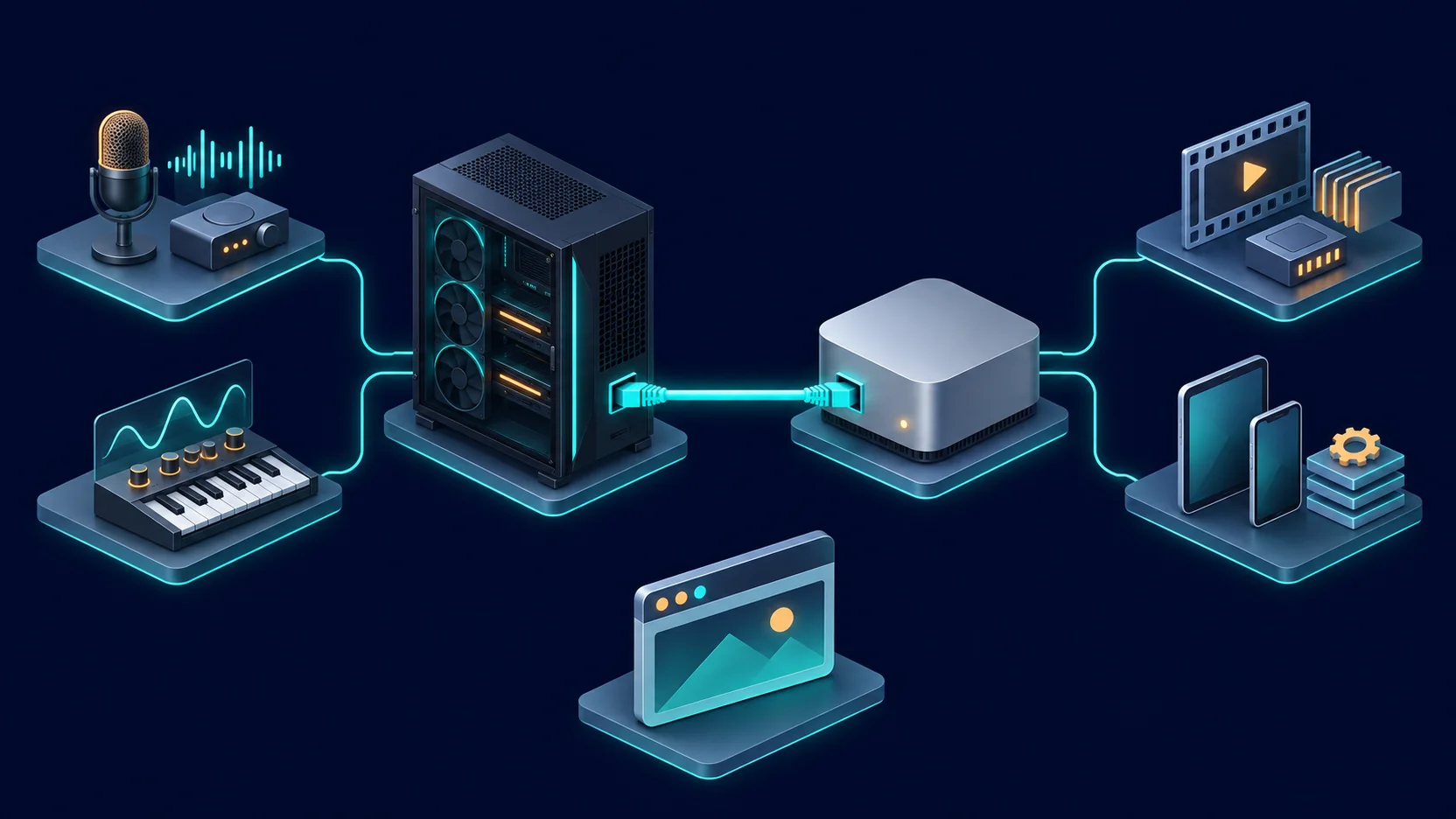
Linux Development Server × Mac mini Wired Direct Connection Architecture: Design to utilize 8GB Unified Memory as "External VRAM" for 4 roles + remote CDP browser.
We explain a design that directly connects a Linux development server and an 8GB Mac mini via a gateway-less 1Gbps wired link, offloading audio, music, video, and iOS builds through single Cloudflare Tunnel aggregation and an exclusive control/idle auto-stop daemon. Furthermore, it resolves main environment conflicts by separating remote CDP browsers via SSH port forwarding.

Architecture of a Low-Cost Vector Search & Data Analysis Platform Built with DuckDB, LanceDB, Cloud Run, and GCS
This article explains the architectural design, application boundaries, and implementation considerations for building a low-cost and practical vector search and data analysis platform. This is achieved by using GCS as the sole persistence layer for Parquet and Lance formats, and executing DuckDB and LanceDB on-demand on Cloud Run, thereby eliminating fixed costs during idle times.

Continuous DevSecOps Beyond Merge-Time Gates: Architecture for Periodic Multi-Axis Audits and Automated Issue Creation via AI Task Scheduler
To address silent degradation—such as new CVEs, configuration drift, and residual unused resources that occur over time and cannot be prevented by CI checks at merge time alone—this article explains an operational architecture that ensures continuous security, cost optimization, and robustness through weekly/monthly multi-axis periodic audits using an AI task scheduler and automated issue creation with deduplication.

No Permanent DB Server Needed: Designing a 'Minimum Cost, High-Precision Hybrid RAG' with Google Cloud Serverless
Google Cloud serverless RAG design that prevents context fragmentation in long PDF documents while keeping permanent DB fixed costs at zero. We explain the integrated architecture for high-speed filtering with DuckDB+LanceDB and precise comprehension with PageIndex+Gemini Decision 1, along with the break-even point.
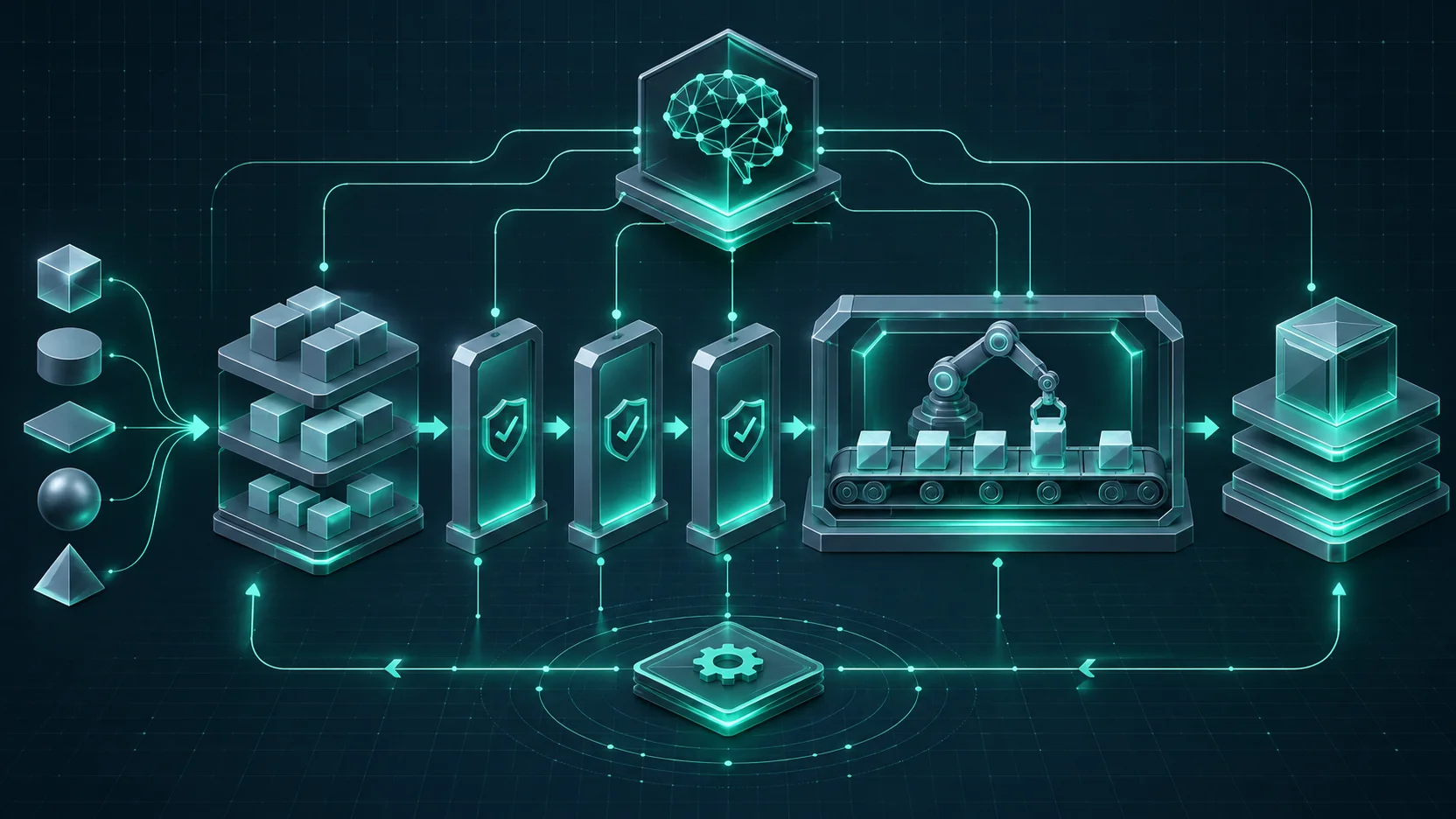
Quality Assurance Process in AI Development: The Two Key Points for Success - 'Requirement Clarification & Approval' and 'Deliverables & Approval'
In AI development, the only essential outputs that humans must agree upon are 'Requirement Clarification & Approval' and 'Deliverables & Approval'. We explain a simple practical model to prevent rework and ensure quality.

Architectural Design for Real-time AI Dialogue Starting from Suggestion Boxes and Overnight Autonomous Feature Modification Pipelines: Automating Requirement Definition via Dual Review by Customers and Developers and Implementing an AI Software Factory
We explain the architecture design and implementation details of an 'AI Software Factory' that receives requests from the field via in-app suggestion boxes, determines requirements through dual reviews for business suitability (customers) and engineering consistency (developers), and executes a continuous flow of three-way triage, automated overnight code and test generation, and multi-layer verification gates (Fail-Closed design).

Architecture for Perfect Reproduction of Design Comps: Detailed Implementation Protocol via Pre-emptive Difference Identification and Left-Right Equal-Scale Slicing Audit
Deconstructing the structural flaws that lead to frequent "subtle misalignments and original creations" in web implementations from Figma and design comps. We detail the entire pixel-perfect reproduction protocol, including pre-emptive difference auditing to confirm discrepancies before writing code, 1200px chunk left-right equal-scale slicing, and an 8-major-perspective matrix.