
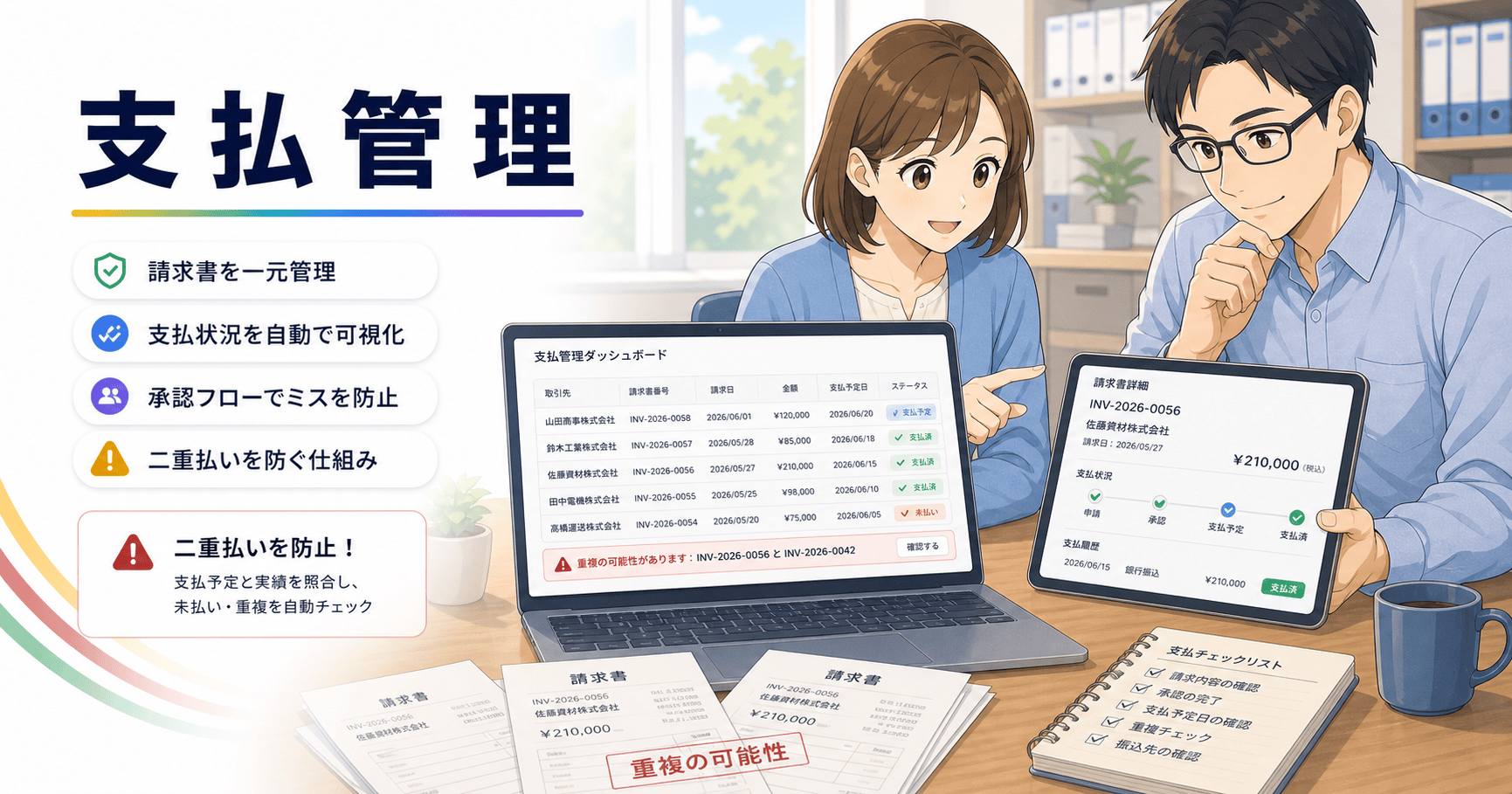
Key points of this article
- Manage payment status in a list
- Cross-reference with past history before payment
- Separate creator and approver
Quick Summary
- Manage payment status in a list
- Cross-reference with past history before payment
- Separate creator and approver
Typical patterns for duplicate payments include receiving the same invoice through multiple channels or proceeding with processing without clear records of whether it has been paid. The basic approach is to manage payment due dates and paid statuses in a list as soon as an invoice is received, creating a system where anyone can understand the processing status. This list also helps prevent oversight during staff handovers. During busy periods, processing can become concentrated, making oversights more likely, so it's important to be mindful of a flexible processing schedule. Since cases can be discovered through dunning notices from business partners, daily verification systems also impact trust.
An effective preventive measure is to establish a verification step that always cross-references the invoice number, vendor, and amount with past payment history before executing payment processing. This is especially important to formalize as a rule not to omit this check when there are many vendors or when multiple people are responsible for payment processing. Separating the person who creates the transfer data from the person who gives final approval is also an effective preventive measure.
To quickly detect any duplicate payments, it is also advisable to incorporate a monthly reconciliation process between bank account withdrawal history and the accounts payable ledger. If payment terms and closing dates vary by vendor, including this information in the ledger will make it easier to notice duplicate or missed payments. The accumulation of such diligent mechanisms supports the reliability of payment operations and the stability of overall company fund management. As the number of vendors increases, the importance of the ledger grows, so it is highly valuable to establish it early on.
Frequently Asked Questions
Q. When implementing "How to Prevent Duplicate Payments in Accounts Payable and Payment Management" in-house, what are the initial challenges that field staff often stumble upon?
A. The main reason is that on-site work flows and input/sharing rules vary from person to person. First, start by inventorying current practices and establishing common rules. Specifically, it is important to proceed by focusing on "managing payment status in a list."
Q. What are the key points and methods for smoothly establishing this in our company's operations?
A. Instead of attempting a company-wide change all at once, conduct a trial run in one business process or department with a small scope of impact, and share the success story. Cross-reference with past history before payment. Also, separate the creator and approver.
Inquiries / Consultations
First, try to list the processing status of invoices to create a state where it's clear at a glance whether they have been paid.


