Summary
Key points of this document
- The goal of automation is not to eliminate judgment, but to reduce repetitive tasks.
- Assumptions for small teams and initial fixed constraints
- Separate data plane and control plane, connecting five loops
Overview
In automation aimed at reducing developer burden, it's more important to manage evidence, state, budget, scope of change, and promotion conditions with a deterministic control plane than to grant broad permissions to AI. This article organizes a configuration that connects error collection to remediation, PR validation, production promotion, and periodic maintenance on GCP, while minimizing GitHub-hosted runner usage, and discusses its limitations.
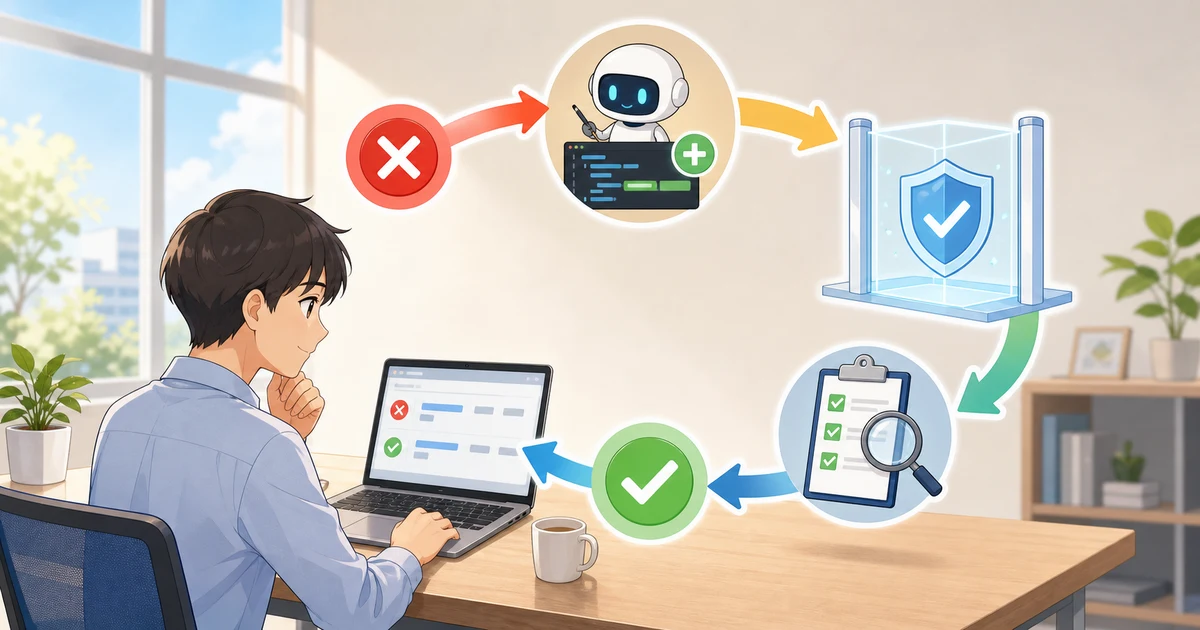
The goal of automation is not to eliminate judgment, but to reduce repetitive tasks.
In small-scale development, more time can be spent on checking failure logs, re-running the same tests, incorporating review feedback, synchronizing translation dictionaries, updating dependencies, and post-deployment monitoring than on building features. Even if individual tasks are short, the problem is that focus is fragmented by notifications and waiting times.
This burden can be reduced by consolidating error collection, batch remediation, per-PR validation environments, database change rehearsals, multi-angle reviews, translation, periodic updates, and production monitoring into a single pipeline. However, as the number of automation stages increases, it becomes crucial to determine which process holds the source of truth, where to stop, and what to revert in case of failure.
The focus should be on the control plane, not the AI model. AI is used for cause classification and patch candidate creation, while execution targets, input evidence, scope of change, budget, tests, branch operations, production traffic, and notification status are managed by regular programs and permission settings. The ability to maintain the same safety boundaries even when models are swapped is a condition for a long-lasting operational design.
- Tasks to remove from humans: log collection, routine classification, limited correction candidates, repetitive validation, dictionary diffs, dependency update candidates.
- Decisions to leave to humans or the control plane: change boundaries, data destruction tolerance, secret information, cost limits, production promotion, exception handling.
- Completion conditions: Not only success, but also safe stopping when indecisive, and preservation of evidence needed for resumption.
Assumptions for small teams and initial fixed constraints
This configuration assumes a small team operating multiple web applications, running heavy builds and E2E tests only when necessary. Applications have a frontend like React Router, use Cloud Run for execution, Cloud Storage for evidence preservation, Firestore for state management, and Compute Engine Spot VMs for batch computations. AI models are called via API, and the control plane does not depend on model-specific capabilities.
GitHub Actions is retained for event reception, branch protection, and displaying check results, while heavy jobs are sent to self-hosted runners. GitHub's official documentation states that jobs running on self-hosted runners do not incur billable minutes. However, this refers to the execution time of GitHub-hosted runners and does not mean that costs for VMs, persistent disks, networks, logs, artifacts, and AI APIs are eliminated.
Another premise is to use disposable self-hosted runners. If untrusted code from PRs and production credentials coexist on a shared runner, modifications or information may remain after the job finishes. Separate PR validation, AI remediation, and production promotion runners by permissions and machine images, and especially do not allow external forks or untrusted PRs into privileged runners.
- Use GitHub Actions for control events and check display, offloading only heavy computations.
- Measure GitHub billable minutes reduction and overall system cost reduction separately.
- Isolate runner pools and service accounts for PR validation, remediation, and production promotion.
- Limit automation targets to processes that are re-executable and can recover from mid-process stops.
Separate data plane and control plane, connecting five loops
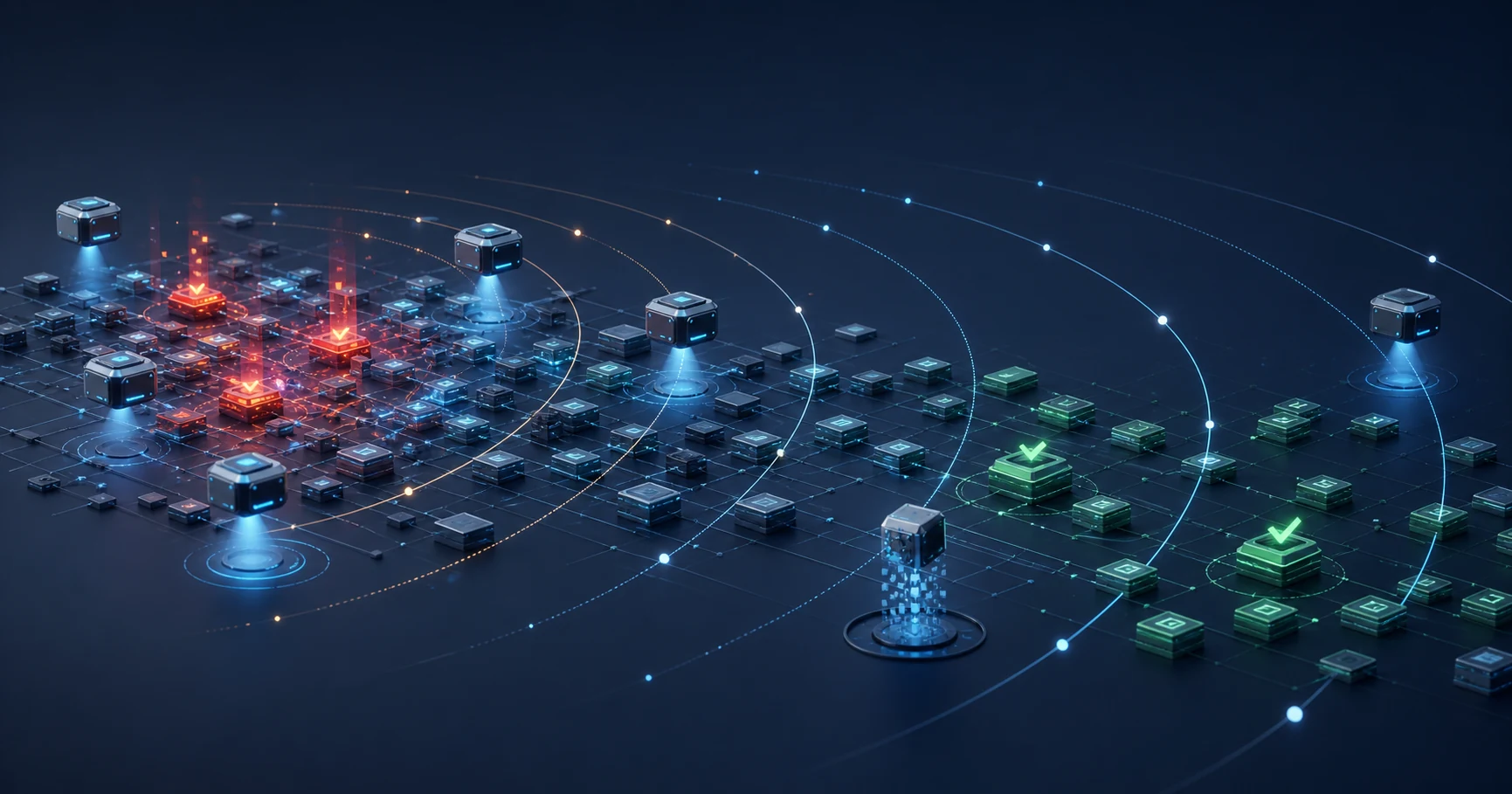
The whole is divided into five loops: real-time observation, hourly remediation, PR validation, production promotion, and daily/weekly maintenance. Each loop can be re-executed independently and correlated by evidence ID on Cloud Storage, Git commit SHA, PR number, Cloud Run revision, and run ID on Firestore.
Data plane includes errors received from Sentry, build logs, E2E results, anonymized database snapshots, and generated translation diffs. The control plane manages their storage locations, digests, processing status, leases, costs, target branches, and promotion revisions. Log bodies and patch bodies are not packed into Firestore state documents; large artifacts are stored in Cloud Storage, with only references and digests remaining in the state.
The output of each loop is not an instruction for the next loop, but a verifiable candidate. For example, even if AI creates a patch, it does not grant push permission, and even if E2E is green, it does not mean all conditions for production promotion are met. By separating contracts, we prevent a single misjudgment from propagating directly to production.
- Observation: App → Sentry → Ingress Cloud Run → Anonymization → Cloud Storage.
- Remediation: Cloud Scheduler → Spot VM → Evidence Aggregation → AI Candidate → Deterministic Inspection → Remediation PR.
- PR Validation: Ephemeral Cloud Run → Isolated STG Data → E2E → Promotion Decision to Integration.
- Production Promotion: Multi-angle Review → Translation Verification → Build → Phased Rollout → Smoke Test → Revision Finalization.
- Regular Maintenance: Changelog/Document Candidates, Dependency Update PRs, Aggregation of Long-term Failure Trends.
Sentry raw logs are minimized, anonymized, and deduplicated before storage.
Uncaught exceptions are detected by Sentry, and alerts or webhooks are sent to the Cloud Run ingress. The ingress process normalizes only the items necessary for remediation, such as event ID, release, environment, stack trace, occurrence time, and browser information. Request bodies, Cookies, Authorization headers, and input values must not be unconditionally stored as 'raw logs'.
Anonymization is performed both on the SDK side before sending to Sentry and in the ingress Cloud Run. Email, tokens, session IDs, query parameters, and free-text fields are dropped based on denylists and structure. The anonymized payload is then stored in Cloud Storage with a schema version and SHA-256 digest. If the original payload needs to be retained, it is stored in a separate remediation bucket with short retention, restricted IAM, and audit logging.
The same failures often occur in large numbers in a short period. In addition to deduplicating event IDs, a failure fingerprint is created from the exception type, normalized message, top-most application frame, and release. In 1-hour batches, for each fingerprint, the count, first and last occurrences, affected releases, and representative examples are summarized, and not all events are fed into the model.
- Before saving: Inspect payload size, content type, schema, shared secrets, or signatures.
- Anonymization: Performed in two stages: before SDK transmission and after Cloud Run reception, excluding free-form input by default.
- Evidence: Retain digest for alteration detection, release, event ID, fingerprint, and reception time.
- Retention: Store only for the period necessary for remediation, and delete with Lifecycle Management.
Spot VMs are launched as one-time runners, assuming they can stop suddenly.
Cloud Scheduler does not directly operate VMs every hour; instead, it passes a run ID to a small, authenticated startup process. The startup process checks for incomplete runs, overlaps in the same time window, budget, and VM status, launching a Spot VM only when necessary. Configuring it not to launch VMs during periods without errors can reduce waste compared to always launching at fixed times.
While Spot VMs offer high discounts, they can be stopped or deleted at any time and may not be able to launch due to lack of capacity. Therefore, the OS disk and runner's working directory are not considered authoritative. Upon launch, the runner is registered from a machine image, processes only one run, saves artifacts and checkpoints externally, then deregisters and stops the VM.
We do not bake GitHub registration tokens, repository write credentials, or AI API keys into persistent images. Instead, we obtain short-lived tokens at startup, do not pass patch push credentials when executing untrusted code from PRs, and pass verified digests to a separate, smaller push process. We narrow the scope of reachability if a runner is compromised by four factors: time, repository, branch, and operation.
- VMs are initialized per run, and work directories, Docker volumes, and credentials are not reused.
- Checkpoints are saved to Cloud Storage, and ownership and state are saved to Firestore.
- Preemption notifications are used to assist the final checkpoint and are not assumed as a prerequisite for normal termination.
- Standard VM fallback in case of persistent Spot capacity shortages will only be enabled after defining cost limits and waiting deadlines.
Instead of locks, we store time-limited leases and state transitions in Firestore.
To handle sudden Spot VM terminations, a simple 'running' flag is insufficient. We add owner, leaseUntil, fencingToken, attempt, checkpoint, inputDigest, and status to the run document, and use transactions to claim it if it's unowned or expired. We extend the lease with heartbeats, and re-verify owner and token immediately before external side effects.
A fencing token is a monotonically increasing value used to prevent old workers from resuming. If worker A's lease expires and worker B takes over with token 12, even if A resumes, it will not accept writes, PR creation, notifications, or production operations with token 11. We do not determine ownership solely by time; instead, we combine tokens and version conditions with each update.
Firestore transactions involve conflicts and retries. If AI API calls or Git pushes are made within a transaction function, side effects may be duplicated due to retries. In transactions, only state reservations are made, and results are finalized with an idempotency key after external processing is complete. The same run ID is attached to PRs, commits, Cloud Run revisions, and notifications so that re-executions converge to existing results.
- Only allow permitted state transitions; do not revert from a terminal state to a running state.
- Do not call external APIs within transactions; separate side effect reservations from result finalization.
- Use lease expiration as a signal for re-execution, and reject old workers with a fencing token.
- Re-requests with the same run ID and input digest should return existing results without creating a new PR.
// Example of run state held in Firestore
{
  "runId": "repair-20260809T0100Z",
  "status": "ANALYZING",
  "owner": "runner-ephemeral-id",
  "leaseUntil": "2026-08-09T01:12:00Z",
  "fencingToken": 12,
  "attempt": 2,
  "inputDigest": "sha256:...",
  "checkpoint": "evidence-clustered",
  "pullRequest": null
}
Errors occurring within an hour are grouped by root cause into a single remediation PR.
Multiple errors occurring in the same release are clustered by failure fingerprint, related frames, timeline, and known causal relationships. Instead of feeding all errors into one giant prompt, we pass only representative evidence and relevant sources for each candidate cause. The model returns the cause, confidence, candidate change paths, patches, and necessary verifications in a structured format.
The purpose of consolidating into a single PR is to reduce deployment waiting times and review bottlenecks. However, mixing unrelated root causes into a single atomic change makes it difficult to isolate and revert failures. Within the same PR, commits are separated by cause cluster, independent clusters are verified individually, and if any cluster touches a critical area, only that cluster is excluded from automatic correction.
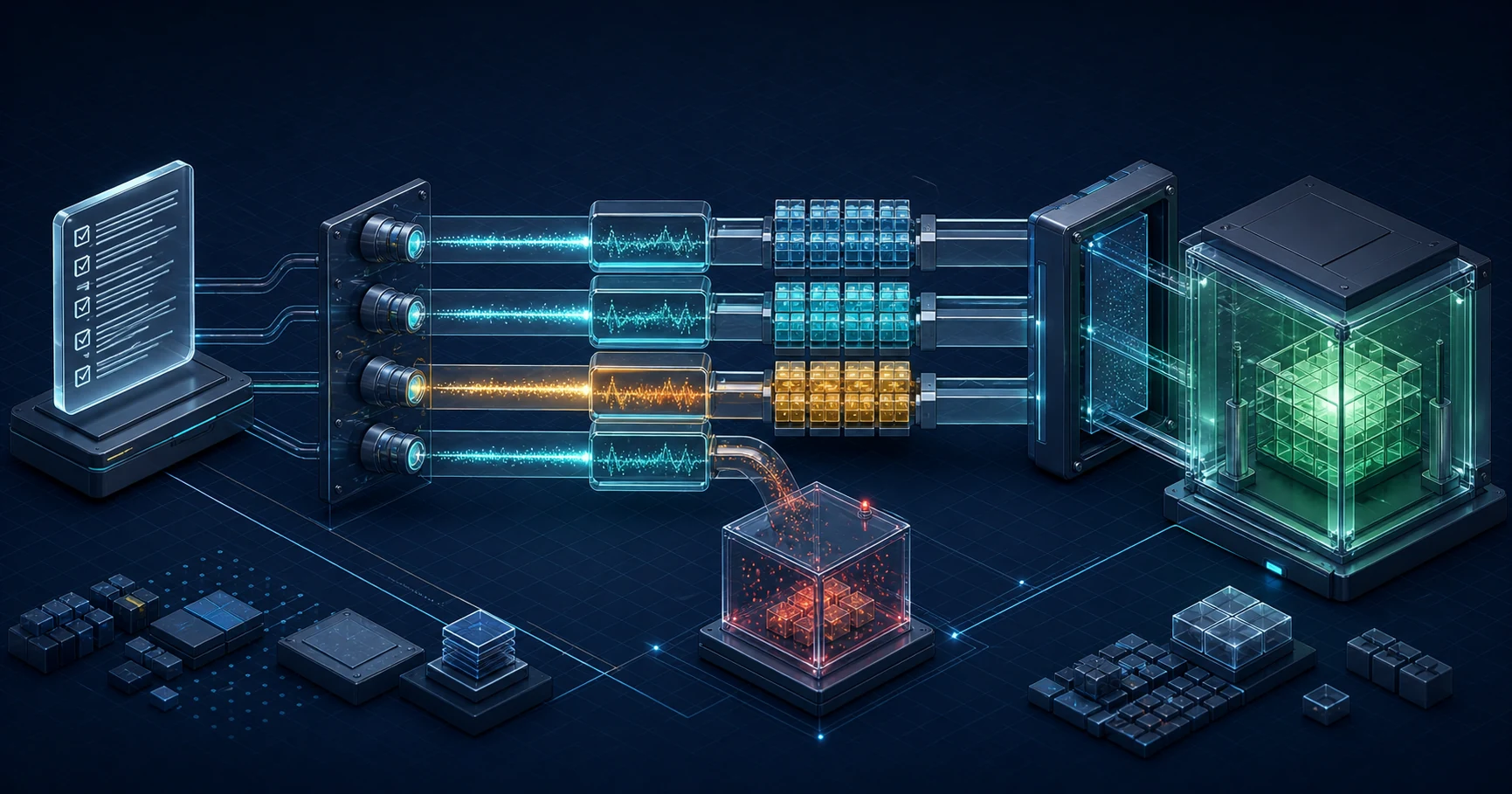
Model output is a suggestion, not an execution command. We deterministically inspect for modifiable paths, total lines changed, new/deleted/renamed files, binaries, secret-like strings, migrations, workflows, authentication, permissions, production settings, and test weakening. We also do not let the model choose verification commands; instead, they are determined from the repository's allowlist based on the changed paths.
Even when adopting a coding model like GLM-5.2, we record the model ID, prompt version, input digest, output digest, token usage, latency, and stop reason. Since API rate limits, terms of service, and model updates can change, we place timeout, max tokens, cost reservation, retry limits, and conditions for switching to a different model on the control plane.
- Suitable for automatic correction: Failures with reproducible tests due to small differences in existing product code.
- Transfer to people: Authentication, authorization, secrets, migration, infrastructure, workflow, dependency contracts, changes in testing criteria.
- Even for a single PR, separate commits and verification evidence by cause cluster to enable individual reverts.
- Stop at maximum attempts, repetitions of the same fingerprint, and limits on tokens, cost, and time.
In a Cloud Run environment per PR, not only the application but also the data is isolated.
When a PR is created, by creating a Cloud Run revision tag like pr-123 or a dedicated service, you can check the screen and API without overwriting the shared STG. When the PR is closed, the service, tag, service account binding, temporary secrets, and data area are identified from the run ID and deleted. Since deletion jobs may fail, a separate daily garbage collection with an expiration label is prepared.
Simply connecting to a shared STG database means that even if the environment is ephemeral, the data remains shared. Isolate per PR by tenant ID, schema, or database, and determine the connection destination from the service identity. The method of isolating only by application query can read data from other PRs if even one condition is missed, so if possible, use schema or database boundaries as well.
In validation that restores an anonymized snapshot of production to a temporary DB container, the anonymization process itself is the test target. Irreversibly replace names, contact information, tokens, free text, attachments, and audit logs while maintaining row counts, foreign keys, and representative distributions. Snapshots are configured with a short retention period and encryption, and are destroyed along with the volume after the runner finishes.
Migration validation is not sufficient just by being able to apply it. Check row counts before and after execution, NULL rates, unique constraints, foreign keys, representative queries, execution time, lock time, disk increase, and rollback or restore time. Destructive changes are divided into expand, backfill, switch, and contract, and the transition period where old and new revisions use the same DB is validated.
- In addition to creating PR URLs and deleting them upon closure, have a sweeper that collects expired resources.
- Measure quotas such as service names, number of revisions, artifacts, IPs, and database connections in advance.
- Anonymized snapshots are validated for anonymization quality, retention period, access principals, and deletion evidence.
- Migration is confirmed not only for the new revision alone, but also including the coexistence period of old and new revisions.
Multi-angle reviews and translations are performed for promotion candidates before they enter main.
If merging to main is the starting point for production deployment, AI reviews for security, performance, UI/UX, and maintainability will be too late after merging to main. Create a release PR from integration, evaluate the four aspects in parallel against a fixed head SHA, re-execute all checks every time a fix is made, and then merge to main. Commits that enter main are treated as reviewed, promoted artifacts.
If four AI reviews are allowed to automatically correct independently, they may overwrite the same line, or one optimization may break another constraint. The reviewer returns structured feedback including points, rationale, impact path, and severity, and the coordinator organizes duplicates and conflicts. Corrections are made as a single patch and confirmed by decisive gates such as type checking, unit tests, E2E, accessibility, bundle size, and dependency vulnerabilities.
For internationalization, in addition to generating translations from Japanese sources, mechanically verify key sets, placeholders, ICU messages, HTML tags, line breaks, links, and numerical units. Do not re-translate translated strings as sources; the Japanese key and the version of the translation memory are the authoritative source. Keep deleted keys, untranslated keys, and changes in meaning for identical keys as diffs.
UI text translation quality cannot be guaranteed by E2E alone. We separately check for layout collapse in long languages, right-to-left languages, dates/currencies/plurals, search metadata, and text for screen readers. AI translations are candidates, and texts where meaning errors are not allowed, such as legal, pricing, personal information, and outage notifications, are excluded from automatic publication.
- Fix the head SHA of the release PR and do not substitute review and translation input midway.
- AI reviewers do not push directly; the coordinator integrates feedback to create a single candidate diff.
- Translation verifies keys, placeholders, tags, locale formats, layouts, and search metadata.
- If main is the production origin, AI fixes after merging to main are treated as separate urgent PRs.
Production is not switched to a new revision all at once; it is promoted with smoke test evidence.
Build the container image only once from a fixed commit on main and deploy to Cloud Run by specifying its digest. Building separate images for STG and production from the same source can introduce differences due to dependency acquisition times or build environment variations. Promoting a verified image with environment-specific settings and service identity makes it easier to track what has been deployed.
The new revision is first placed on a traffic 0 tag, and authentication, main reads, main writes, external integrations, static assets, and database compatibility are checked via the tag URL. Then, it proceeds in order of small traffic, observation time, and full traffic. Smoke tests check not only HTTP 200 but also expected body, write results, request IDs in logs, and responses from dependencies.
If it fails, traffic is reverted to the previously recorded healthy revision. Rollback is done by changing Cloud Run traffic, not by rebuilding the source, and database migration is guaranteed to be backward compatible before promotion. This is because applying incompatible migrations simultaneously means that even if only the application revision is rolled back, recovery will not be possible.
Traffic changes are not instantaneous, and requests during migration may reach either the old or new revision. This affects stateful processing, session affinity, queue consumers, and duplicate execution, so idempotency and schema compatibility are designed assuming coexistence of old and new.
- Build once: consolidate commit SHA, image digest, SBOM, and verification results into a single release manifest.
- Promote in the order of traffic 0 tag → smoke → small traffic → observation → full traffic.
- Save the previous healthy revision and traffic settings to allow rollback without rebuilding.
- DB changes should be independently reversible from application rollback, or compatible with old revisions.
Notifications are limited to changes in production status, and unnotified failures are made auditable.
Sending every CI failure, AI's decision to skip a fix, or dependency update PR failure to Google Chat can bury critical production incidents. Paging-equivalent notifications can be limited to when production status on Firestore changes from HEALTHY to UNHEALTHY, and when it returns from UNHEALTHY to HEALTHY. Even if smoke tests repeatedly fail in the same state, no re-notification is sent for the same incident ID.
However, complete lack of notifications risks missing that 'the monitoring process itself has stopped.' We maintain lastSmokeAt, lastSchedulerAt, lastEvidenceAt, and lastRunnerHeartbeat, and if they are not updated for a certain period, the control plane is treated as UNHEALTHY. This is because even if the application is normal, if it cannot be monitored, HEALTHY cannot be proven.
Even if automatic rollback succeeds and user impact is resolved quickly, a transition from HEALTHY to UNHEALTHY is notified once. Recovery notifications include incident ID, impact duration, failed revision, recovered revision, and a reference to smoke test evidence. Raw logs, secrets, or user data are not included in the notification body.
Even if internal failures are not notified, their status, reasons for stoppage, attempts, costs, and artifact references are made searchable. Reducing notification noise is different from making problems invisible. By checking success rates, reasons for deferral, average recovery times, and deduplication counts weekly, you can determine if automation is silently degrading.
- The authoritative source for notifications should be the incident status and transition versions in Firestore, not chat history.
- Notification sending also has an idempotency key to prevent duplicate notifications when the sending result is unknown.
- Include the absence of a monitoring heartbeat in the production unhealthy state to avoid misinterpreting silence as normal.
- Even if internal failures are not notified, they are retained in a form that allows for searching, aggregation, re-execution, and auditing.
// Production state transitions triggering notifications
HEALTHY   -> UNHEALTHY : Attempt rollback, notify of incident once
UNHEALTHY -> UNHEALTHY : Add evidence, do not notify for the same incident
UNHEALTHY -> HEALTHY   : Confirm smoke test success, notify of recovery once
HEALTHY   -> HEALTHY   : Update only status and heartbeat, do not notify
Daily documentation and weekly dependency updates create verifiable diffs, not public releases.
Daily batches that generate changelogs and documents from commit logs will initially create draft PRs instead of publishing directly. Since commit messages alone cannot determine user impact, incompatible changes, or migration procedures, the input will include change diffs, release labels, existing documents, and explicit front matter. Commits serving as evidence will be associated with each item, and explanations without evidence will not be adopted.
Documents in multiple languages are translated after the Japanese draft is finalized and are given a source digest. Only pages where the Japanese has changed are regenerated, ensuring that unchanged pages are not unnecessarily rewritten even if the translator or AI model changes. Links, heading IDs, code blocks, product names, numbers, and dates are mechanically cross-referenced.
Weekly npm updates separate patch, minor, major, runtime, build tool, and test tool updates. The method of upgrading everything at once and merging if green makes it difficult to trace the cause of hidden behavioral differences. We check lockfile diffs, install scripts, licenses, known vulnerabilities, bundle size, unit tests, and E2E tests, and reserve major updates and updates touching security boundaries for human judgment.
Even when automatic merging to integration is allowed, it is conditional on updates in the same group being green for a certain period, not just passing after re-running flaky tests, but meeting a fixed number of reproducibility criteria. It is not merged directly to production but goes through multi-faceted review and production promotion as a regular release candidate.
- Generated results are made into draft PRs, retaining the evidentiary commit, source digest, and model version.
- Only changed pages are updated for documents and translations, and mechanical structural checks are passed first.
- Dependency updates are grouped by change type and scope of impact to be of a size that allows for isolating the cause.
- Promotion criteria include flaky test rate and reproducibility, not just a single E2E green.
We protect three things separately: least privilege, untrusted input, and supply chain.
In this configuration, Sentry payloads, Git source and diffs, dependencies, test outputs, and AI outputs are all untrusted inputs. We do not treat instructions in logs as prompts, and we prevent changes to allowed paths, verification commands, credentials, or budgets based on instructions within the source. Inputs sent to the model are separated by schema and pass through secret scans and size limits.
Service accounts are separated for receiving, evidence reading, runner activation, AI calls, PR creation, STG deploy, production deploy, and notifications. We do not grant broad Editor privileges to the runner's default service account. The production deploy principal does not directly execute PR source but promotes only image digests and configurations permitted by the release manifest.
Actions, container base images, npm packages, and runner binaries are also part of the supply chain. We fix versions or digests and record SBOMs, vulnerability scans, signatures or provenance, and expiration dates. We ensure that weekly update automation does not become a path for executing unverified install scripts with privileged runners.
When sending source or logs to an AI API, we check terms of service, storage, learning use, region, deletion, auditing, and subprocessor. For highly sensitive repositories or user data, it may also be necessary to decide on paths not to send, local models, or methods that only send summaries.
- Do not extend permissions, budget, scope of change, or execution commands based on the content of untrusted input.
- Separate credentials for receiving, computing, Git writing, STG, production, and notifications.
- Do not run external forks, untrusted PRs, or dependency installs on runners with production privileges.
- Decide on information classification and retention conditions for sending to model providers before implementation.
We evaluate 'GitHub Actions for ¥0' not by its face value, but by processing unit cost and standby fees.
Moving heavy jobs to self-hosted runners avoids using GitHub-hosted runner billable minutes. However, costs will be incurred for Spot VM startup time, persistent disks, snapshots, Cloud Storage, Firestore read/write, Cloud Run, Cloud Scheduler, logging, network egress, AI API, and artifact retention. Since the location of costs shifts, we do not assume zero cost by only looking at Actions billing.
Hourly batches have the advantage of grouping common root causes to reduce model calls and PR counts. However, this design cannot make high-urgency failures wait for up to an hour. Production errors affecting users are sent to an immediate rollback path, and only the creation of repair candidates is batched. We separate the timelines for ensuring safety and fixing the root cause.
Costs are measured per incoming event, per fingerprint, per repair attempt, per PR, and per release. For AI, we set not only daily/monthly limits but also maximum input, output, retries, and wall clock time per run. If the budget ledger cannot be read, we stop new calls without guessing the remaining balance.
The cheapest configuration is not always the best. If repairs are delayed for hours due to Spot capacity shortages, if complex control plane maintenance takes too long, or if shared STG separation is insufficient, partially using Cloud Run Jobs, GitHub-hosted runners, and managed CI might lower the total cost.
- Compare GitHub minutes, GCP, AI API, storage, monitoring, and maintenance hours in the same monthly table.
- Separate response time requirements: immediate for production protection, batch for root cause fixes.
- Set limits on tokens, retries, wall clock time, VM time, and artifact volume per run.
- Treat control plane complexity and recovery time as costs equivalent to infrastructure fees.
Expand automation scope in the order of observe, suggest, repair, promote.
If we automate all fixes, merges, translations, dependency updates, and production rollbacks from the start, we cannot verify which boundaries were effective. In the first stage, we only observe, measuring the accuracy of fingerprints, evidence, state transitions, costs, and notifications. In the second stage, we proceed to 'suggest,' where AI creates PR drafts, and we record the differences from human corrections.
In the third stage, we enable 'repair,' which automatically merges only small fixes outside the protection path to integration. In the fourth stage, we proceed to 'promote,' which performs staged delivery of verified images and automatic rollbacks. Each stage has stopping criteria for miscorrection rate, recurrence rate, mean time to repair, rollback success rate, stale runner collection rate, notification duplication rate, and monthly cost.
In failure drills, we reproduce situations such as stopping Spot VMs during processing, expiring Firestore leases, duplicate delivery of the same webhook, rate-limiting the AI API, updating the head just before a runner push, failing a migration midway, failing a Cloud Run smoke test, and making notification sending results unknown. E2E tests for normal operation alone cannot validate the value of this foundation.
Operational maturity cannot be measured by humans never looking at a screen. It's important for it to be quiet when nothing is happening, for accurate status and evidence to be consolidated into a single incident during anomalies, and to safely stop or revert.
- observe: Only collect and record status, do not fix.
- suggest: AI creates a draft PR, and a human reviews its adoption and diffs.
- repair: Automatically promote only small fixes within the allowed scope to integration.
- promote: Stage delivery of verified artifacts and automatically rollback upon smoke test failure.
Conditions where this configuration is not suitable, and remaining human tasks
The configuration is designed for operation with a small number of people, but the control plane itself is a distributed system. It requires maintaining leases, duplicate execution, eventual consistency, credentials, quotas, rollbacks, and auditing. For services with low change frequency or repositories with short E2E, using the free tier or pay-as-you-go of managed CI might be simpler and cheaper.
In environments with weak tests, implicit specifications, frequent unreproducible failures, and migrations without backward compatibility, the automatic merge range for AI repair cannot be expanded. First, it is necessary to set up reproducible fixtures, health checks, smoke tests, branch protection, and release manifests. Automation does not replace the foundation of quality.
Furthermore, judgments regarding security, performance, UI/UX, and maintainability are not independent of each other. AI's four evaluations are aids to reduce oversights and cannot be the entity that approves contracts, laws, significant impacts on users, or irreversible data changes. Even if the number of dispatches is reduced, the final judgment in exceptional cases and regular boundary reviews remain with humans.
- For infrequent changes, small scale, and short CI, managed runners tend to keep total costs lower.
- Do not enable automatic merging at stages without reproducible tests and backward-compatible migrations.
- Irreversible data changes, permissions, legal matters, fees, and significant user impact are left for human approval.
The core of full automation is not AI, but a control plane that can safely stop.
By connecting error collection, Spot VMs, self-hosted runners, AI repair, ephemeral STG, migration verification, multi-angle review, translation, dependency updates, phased delivery, and automatic rollback, human repetitive tasks can be greatly reduced. This effect is supported not by the model's intelligence, but by a design that leaves evidence and state externally and ensures re-execution converges to the same result.
There are three decision criteria to take away for practical work: minimizing and anonymizing input before passing it to AI, surrounding AI with decisive gates for diffs, permissions, budgets, and tests, and being able to resume or rollback from abnormal conditions including Spot instance termination or notification failures.
Even when aiming for an operation where humans do not intervene until a notification sounds, silence itself cannot be proof of normalcy. Heartbeats, audit logs, and regular disaster drills confirm that the control plane is still working as expected. The completion of automation is not about eliminating humans, but about precisely preserving only the situations where human judgment is required.