Summary
Key points of this document
- The difficulty of account management begins after login.
- The three tiers are understood in the order of increasing ownership boundaries.
- "Exponentially increasing" refers to the explosion of combinations and validation points.
Overview
When considering account management, it's not always as simple as creating a single login screen. The more you differentiate users, their affiliated tenants, the brands provided, the scope of administrators, the authoritative source of data, and the units for billing and auditing, the more states and validations are required. A system that takes a few hours to take shape in a single-tenant environment might take several days in a multi-tenant setup, and even longer for white-label, not because of the number of features, but because of the increased combinations of boundaries. This article organizes these three tiers not as different product names, but as stages of responsibility and risk.
The difficulty of account management begins after login.
If it's just about verifying an email address and password and letting users into the screen, it can be achieved with minimal authentication features. However, in business applications, it's necessary to determine each time who belongs to which organization, what data they can read and write, and what administrative operations they can perform. Including retirements, transfers, expired invitations, concurrent roles in multiple organizations, emergency shutdowns, and audit logs, an account becomes not just login information, but a collection of changing relationships.
Furthermore, as the number of providers increases, it becomes necessary to differentiate which tenant the same user belongs to, whether contract features and retention periods differ per tenant, and whether operators can act as proxies for customer administrators. In white-labeling, which involves switching brand names and custom domains, it's not just about visual changes, but also who can issue invitations and which support staff can view audit logs.
The three tiers in this document do not indicate technical superiority. They are a classification for estimating the necessary number of separations. Each time you move up a tier, you need to re-evaluate the boundaries of data models, authorization, screens, notifications, billing, monitoring, backups, and support.
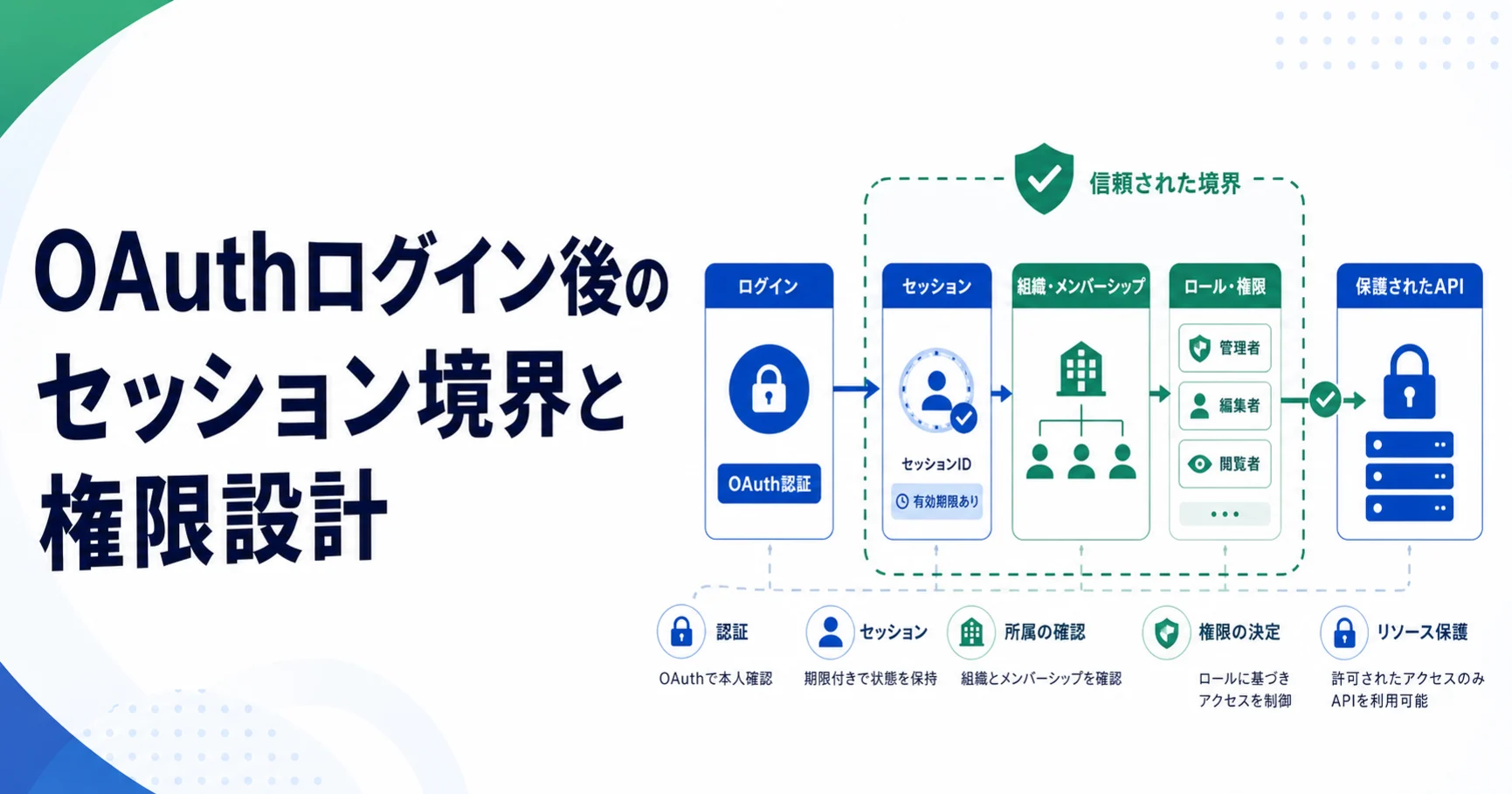
- Authentication: Confirming the user's identity.
- Affiliation: Confirming which tenant the user belongs to.
- Authorization: Confirming what the user is allowed to do within that tenant.
- Operations: Confirming who is responsible for invitations, suspensions, audits, deletions, and recoveries.
The three tiers are understood in the order of increasing ownership boundaries.
Single-tenant is a configuration where one customer or one user organization uses a dedicated execution environment and data area. Since the relationship between users and organizations is almost one-to-one, you can start with a small number of roles such as account, administrator, and general user. By separating settings for each environment, the paths for data leakage can also be relatively limited. However, even with a dedicated configuration, invitations, suspensions, audits, and backups should not be omitted.
Multi-tenant is a configuration where multiple customer organizations share applications and databases while separating their data and permissions. Simply having a tenant_id for all business data is insufficient; tenant boundaries must be protected across API, SQL, cache, search indexes, queues, file paths, logs, and administration screens. Aggregation across tenants and operator support access should also be designed as separate permissions from regular users.
White-label is the stage where multiple brands or sales entities provide a common functional platform as their own service. Brand settings, custom domains, email senders, terms of service, contact points, contract features, billing units, and support permissions are added. In configurations where brand administrators can create tenants under their purview, a hierarchy of operator, brand administrator, customer administrator, and user must be represented.
- Single-tenant: Separation is easy to ensure per environment, but operational overhead increases per customer.
- Multi-tenant: Reduces shared costs but enforces tenant separation per request.
- White-label: Adds brands and delegated management above tenants, separating display, contracts, and support.
// 3-tier responsibility boundaries (generalized organization)
Single tenant
  account -> one organization -> isolated data / roles

Multi-tenant
  account -> memberships -> tenant -> shared runtime with isolation
  platform operator may see cross-tenant operations by explicit policy

White-label
  platform operator -> brand -> tenant -> memberships -> account
  brand controls presentation, policy defaults, domain and support boundary
"Exponentially increasing" refers to the explosion of combinations and validation points.
In a single-tenant prototype, narrowing down key acceptance criteria can be done by checking if users can view their organization's data and if only administrators can send invitations. In a multi-tenant setup, combinations arise where User A can view data for Tenant 1, but not data for Tenant 2, even if the same user belongs to both. With the addition of caches and asynchronous jobs, it's also necessary to verify whether the correct tenant_id is maintained during delayed processing and retries.
In white-label solutions, we verify that brand administrators can only manage their own subordinates, that operator support actions are not mistakenly visible to customers, and that emails and domains for each brand do not get mixed up. Each time we add axes like users, tenants, brands, roles, features, and environments, the combinations of permissions and denials accumulate. It's more appropriate to view this not as strictly predicting a mathematical exponential function, but as a warning that estimating effort based solely on the number of features will quickly become inaccurate.
Therefore, estimates of hours, days, or even longer durations are not universal empirical values, but rather planning guidelines for deploying the same functionality to a different boundary. The range varies greatly depending on existing authentication infrastructure, testing, operational automation, data volume, and legal requirements. Estimates should not only count features but also enumerate states, failure paths, migrations, and audits for each boundary.
- Shift the unit of estimation from the number of screens to boundaries, states, and failure paths.
- Verify not only permission cases but also an equal number of denial cases for different tenants and brands.
- Durations like hours, days, or longer are estimates and vary depending on existing infrastructure and validation capabilities.
// Example of verification axes to count during estimation
verification_surface =
  accounts
  x memberships
  x tenants
  x roles
  x feature_entitlements
  x environments
  x failure_modes

estimate_work =
  data_model + authorization + UI_states
  + background_jobs + migration + operations + tests

# The product is not a calendar promise.
# It is a reminder to count boundaries, not screens.
Do not force accounts, affiliations, tenants, and brands into a single table.
What to avoid at the beginning of design is directly adding organization_id, role, and brand_id to the users table and then adding exceptions later. Constraints such as a single user not being able to belong to multiple tenants, a brand administrator not being able to manage subordinate tenants, or the ability to reference the subject of audit history even after withdrawal will surface later. Keep relationships as separate entities and separate business affiliation from personal identification.*Account represents personal identification, Tenant represents the boundary of data and contracts, Membership represents the relationship of an Account joining a Tenant, RoleAssignment represents permissions within that relationship, and Brand represents the boundary of display and provider. Platform operator permissions should not be mixed with customer tenant roles; instead, they should be recorded as separate delegations with expiration dates and reasons for support operations and audit viewing.*In databases, it is safer not to use null for tenant_id to mean 'shared across all'. Shared data should be separated into platform-scoped tables, and tenant data should have a mandatory tenant_id and a composite unique constraint. Even when using PostgreSQL's Row-Level Security, the application side should verify that the tenant context set for the connection matches the authenticated request.
Separate Account and Membership to represent belonging to multiple tenants and withdrawal history.
Give RoleAssignment a target scope and expiration date to avoid increasing permanent administrative privileges.*Maintain a separate relationship between Brand and Tenant to avoid implicitly changing data owners when a brand changes.*Audit events should record the subject, target tenant, reason, time, and correlation ID.
- Create a validated tenant context from an authenticated account.
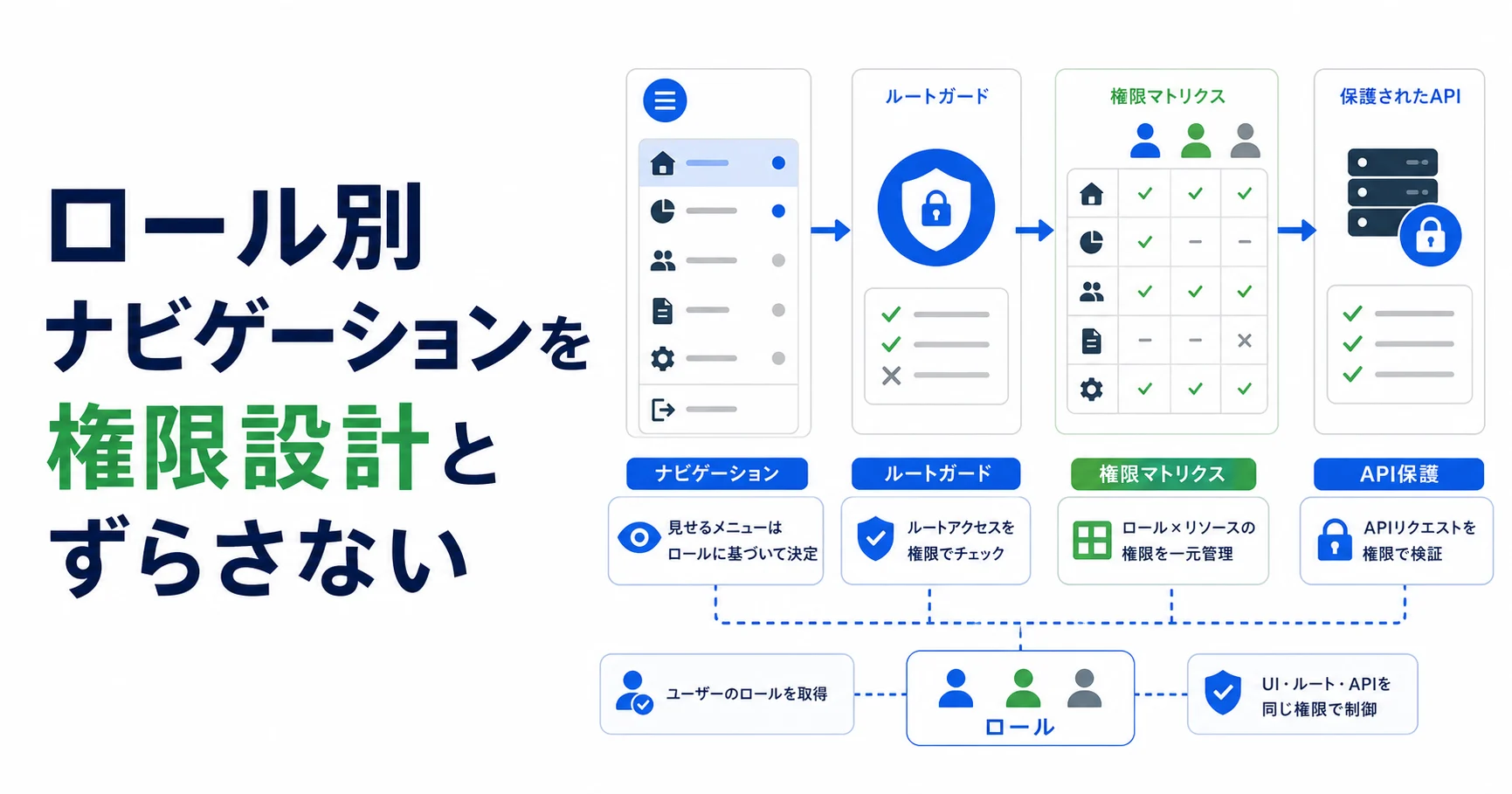
- ID tokens and sessions obtained through login are materials that indicate personal identification. Do not complete authorization by simply adding the tenant_id from the request body to this. The server should read valid Memberships from the session's account ID, confirm that the tenant selected by the user is included in that list, that the Membership is not suspended, and that the necessary RoleAssignment is active, before creating a short request context.
- If you make the tenant dependent on only one of the URL, body, Cookie, or cache key, mix-ups will occur for each path. Consolidate the authenticated account, selected tenant, brand, operation, and target resource into a single policy input, and make decisions with a policy engine or explicit authorization function. Support operations by administrators require a different reason for operation, expiration, and scope than the user's normal session.
- Even if tenant_id is fixed in the session, Membership suspension or role expiration cannot be reflected immediately. For critical operations, check not only cached sessions but also permission references with short TTLs or version numbers. A design that updates session_version upon permission changes and forces old sessions to re-authenticate or re-select narrows the boundary.
// Minimal Data Model Example (Conceptual Schema)
accounts(id, identity_key, status, created_at)
tenants(id, status, plan_key, data_region, created_at)
memberships(account_id, tenant_id, status, joined_at, left_at)
role_assignments(membership_id, role_key, scope, expires_at)
brands(id, owner_account_id, default_policy_id, domain_status)
brand_tenants(brand_id, tenant_id)
audit_events(id, actor_account_id, tenant_id, action, reason, occurred_at)

# tenant-scoped records must carry tenant_id and be checked at every boundary.
# platform-scoped records live in a separate namespace.
Do not use the tenant_id in the body as the basis for authorization; determine available tenants from Membership.
Cross-verify tenant information in the domain, URL, body, and cache key.
If a tenant's dependency is placed on only one of the URL, body, Cookie, or cache key, mismatches will occur for each route. Consolidate the authenticated account, selected tenant, brand, operation, and target resource into a single policy input, and determine authorization using a policy engine or explicit authorization function. Support operations by administrators require a different reason, duration, and scope of operation than their usual session.
Even if the tenantid is fixed in the session, membership termination or role expiration cannot be reflected immediately. For critical operations, in addition to cached sessions, check authorization references with short TTLs and version numbers. Designing the system to update the sessionversion upon permission changes and revert old sessions to re-authentication or re-selection narrows the boundaries.
- Do not use the tenant_id in the body as the basis for authorization; instead, determine available tenants from Membership.
- Cross-verify tenant information in the domain, URL, body, and cache key.
- Suppress the persistence of old sessions by using session_version and short TTLs when changing permissions.
- Separate proxy support from regular customer administrator roles and audit the reason, duration, and scope.
// Pseudocode for request authorization
const account = requireAuthenticatedAccount(request);
const tenant = await resolveTenantFromMembership(account.id, request);
const brand = await resolveBrandForTenant(tenant.id, request.host);

const decision = authorize({
  account,
  tenant,
  brand,
  action: request.action,
  resource: request.resource,
  sessionVersion: request.session.version,
});

if (!decision.allowed) throw new ForbiddenError(decision.reason);
return executeWithTenantContext({ account, tenant, brand });
Separation extends beyond the database to asynchronous processing and operational aspects.
Multi-tenant incidents are more likely to occur in peripheral functions than in SELECT statements of the main table. We check each path, such as Redis keys lacking tenant_id, search index document_ids colliding globally, R2 or S3 paths not including the brand, or email resend jobs referencing destinations of other tenants. We not only pass tenant context to libraries but also create default values that fail if context is missing.*Queue messages should carry tenant_id, brand_id, actor_id, schema_version, correlation_id, and idempotency_key, and be re-authorized on the consumer side. Even if permitted at reception, Membership might be suspended at execution time. Operations like retries or moving messages back from a Dead Letter Queue should also display which tenant's data is being handled and require explicit approval by an operator with appropriate permissions.*Monitoring and backups also consider scope. While error rates and queue backlogs can be aggregated by tenant and brand, care is taken not to expose too much body content or personal information in logs. For deletion requests, retention requirements for the main data, files, search indexes, backups, and audit trails are separated, and deletion completion is not expressed by a single flag.
Enforce the same scope across DB, cache, search, object storage, email, and queues.*Authorize asynchronous processing in two stages: at reception and at execution, and make retries idempotent.*Align monitoring aggregation axes and log secrecy ranges with tenant and brand contracts.*Verify deletion, export, and backup restoration on a per-tenant basis.*Define the conditions for advancing to the next tier before implementation.*Aiming for white-label from the start means prematurely building mechanisms for brand settings, delegated administration, domains, billing, support, and migration for a sales model that doesn't yet exist. Conversely, hardcoding single-tenant assumptions into the code too much leads to large migrations later to add tenant_id or Membership. Between an all-inclusive preemptive approach and fixed code that doesn't consider the future, prepare only the next necessary boundaries.*In the single-tenant phase, Account and Tenant can be conceptually separated while operations are limited to a single tenant. By creating Membership, audit events, and tenant-scoped Repository boundaries early, you can avoid a complete rewrite of business logic when moving to a shared database. Even if you don't proceed to white-label, this separation is useful for withdrawals, department additions, and permission audits.
The decision to advance a tier is based not only on projected customer numbers but also on operational and verification capabilities. If automated tenant separation tests, permission change audits, backup restoration, rate limiting, graceful degradation during failures, and support responsibility boundaries are not in place, it's better to solidify the foundation before adding brand features to reduce long-term rework.
- Do not prematurely generalize delegated administration or brand settings that are unnecessary at the current tier.
- However, fix the conceptual boundaries of Account, Tenant, Membership, and auditing early to allow for future migration.
- Define the conditions for advancing to the next tier with evidence from testing, restoration, auditing, and operations.
- Verify deletion, export, and backup restoration on a per-tenant basis.
Define the conditions for advancing to the next tier before implementation.
If you aim for white-labeling from the start, you'll prematurely take on brand settings, delegated administration, domains, billing, support, and migration mechanisms for a sales model that doesn't yet exist. Conversely, if you hardcode single-tenant assumptions into the code, a later migration to add tenant_id or Membership will be extensive. Between an all-inclusive, preemptive approach and a fixed approach that doesn't consider the future, prepare only the necessary boundaries for the next step.
In the single-tenant phase, you can conceptually separate Account and Tenant while limiting operations to a single tenant. By establishing Membership, audit events, and tenant-scoped Repository boundaries beforehand, you can avoid a complete rewrite of business logic when moving to a shared database. Even if you don't proceed to white-labeling, this separation is useful for withdrawals, department additions, and permission audits.
The decision to advance to the next tier should be based not only on projected customer numbers but also on operational and verification capabilities. If automated testing for tenant isolation, auditing of permission changes, backup restoration, rate limiting, graceful degradation during failures, and support responsibility boundaries are not in place, it's better to solidify the foundation before adding brand features to reduce long-term rework.
- Do not prematurely generalize delegated administration or brand settings that are unnecessary at the current tier.
- However, establish the conceptual boundaries of Account, Tenant, Membership, and auditing early to allow for future migration.
- Define the conditions for advancing to the next tier with evidence from testing, restoration, auditing, and operations.
- Record gate misses not as failures, but as design decisions to maintain the current scope.
// Example of phased introduction gates
single -> multi gate
  - every tenant record has a non-null tenant_id
  - cross-tenant read/write tests are automated
  - cache, search, files and jobs carry tenant context
  - backup restore and tenant export are repeatable

multi -> white-label gate
  - brand / tenant ownership is explicit
  - delegated administration has scope, expiry and audit
  - domain, mail, policy and support boundaries are tested
  - per-brand limits and incident response are observable

if a gate is not met: keep the current level and record why.
Sharing involves tradeoffs in performance, cost, and fault isolation.
Multi-tenancy facilitates sharing execution environments and operations, allowing resource allocation based on usage. However, heavy processing by one tenant can monopolize shared queues or DB connections, slowing down responses for other tenants. Implement tenant-specific rate limits, concurrency limits, storage caps, priorities, and billing meters to measure the assumptions of sharing.
Single-tenancy makes it easier to narrow the scope of failures and data deletions, but as the number of environments increases, patching, monitoring, backup, and key rotation become individualized. It is more flexible not to decide on dedicated or shared for the entire system at once, but to evaluate for each entity whether dedicated resources are truly necessary, or if shared resources can meet contractual, regulatory, and performance requirements.
In white-label solutions, the more brand independence is increased, the more configuration combinations and inquiry points arise. If not only themes but also terms of service versions, notification templates, email sending domains, administrator responsibilities, and incident notification channels differ per brand, each must be subject to configuration, auditing, and verification. It is also crucial not to force operational differences that cannot be absorbed by configuration into massive conditional branches.
- Benefits of sharing: resource utilization, common fixes, consolidated monitoring and operations.
- Burdens of sharing: noisy neighbors, boundary bugs, common failures, contract-specific restrictions.
- Benefits of dedication: easier to clarify the scope of failures, deletions, and performance.
- Burdens of dedication: patching, monitoring, backup, and key management proportional to the number of environments.
In verification, prioritize tests that do not cross boundaries over permission tests.
In account management testing, permission cases such as administrators being able to invite users or users being able to read their own data are prominent. For multi-tenant systems and beyond, prioritize verifying correct rejection when the same account accesses a URL of a different tenant, resends an API with an expired Membership, retries a queue, or directly rewrites a brand's domain.
Test data should include at least two tenants, two brands, multiple Membership states, expired roles, suspended accounts, and operator impersonation. The same scenario should be run through not only DB unit tests but also APIs, screen transitions, emails, files, jobs, searches, and audit logs. Test pass/fail should check not only status codes but also that no data from other scopes is returned.
In production, aggregate metrics including tenant_id and brand_id in a way that does not conflate them with personal information, and detect abnormal cross-access or changes in rejection rates. For authorization changes, impersonated access, exports, deletions, and restorations, leave audit trails that can reconstruct who did what later. Explicitly state areas where verification cannot be automated as prerequisites for moving up the hierarchy.*Use two or more tenants/brands to verify permissions and rejections in the same scenario.*Traverse all paths: sessions, APIs, screens, caches, searches, files, jobs.
- Confirm not only rejection results but also that responses, logs, and side effects contain no information from other scopes.
- Ensure that impersonated access, permission changes, deletions, and restorations can be reconstructed from audit trails.
- Defining the scope of what to build is the first task in account design.
- Single-tenant, multi-tenant, and white-label are not three names for slightly extending the same functionality. They are three design stages that increase the number of data owners, administrator delegation scopes, brand responsibilities, units of failure and deletion, and combinations to verify. Therefore, a prototype that might take a few hours to complete for single-tenant could take several days for multi-tenant, and even longer for white-label.
To minimize this time difference, it's not necessary to create all configuration items from the start. Separate the boundaries of Account, Tenant, Membership, Role, and Brand with language and data models, and explicitly disable hierarchies not currently in use. Document the conditions for advancing to the next hierarchy as evidence for testing, auditing, restoration, and operations. Maintaining the current scope until these conditions are met will ultimately improve the predictability of development and maintenance.
The first question to decide in account management is not just 'how far will we sell in the future?' It's: whose data, by whom, for what period, and for what reason needs to be handled? If the answer can be fully contained within a single tenant, don't rush into unnecessary sharing. If multiple tenants or brand delegation are truly necessary, first count the increasing boundaries and include the implementation, verification, and operation periods in the plan. This order serves as the decision-making axis for appropriately defining the scope of the system to be built.
To minimize this perceived time difference, there's no need to create all configuration items from the start. Separate the boundaries of Account, Tenant, Membership, Role, and Brand with clear terminology and data models, and explicitly disable tiers not currently in use. Document the conditions for advancing to the next tier as evidence from testing, auditing, restoration, and operations. Maintaining the current scope until these conditions are met will ultimately increase the predictability of development and maintenance.
The first question to answer in account management isn't just, "How far will we sell in the future?" It's: Whose data, by whom, for what duration, and for what reason needs to be handled? If the answer can be fully contained within a single tenant, don't rush into unnecessary sharing. If multiple tenants or brand delegation are truly necessary, first enumerate the increasing boundaries and include the implementation, verification, and operational periods in your plan. This sequence serves as a decision-making axis for appropriately defining the scope of system development.