
Key points of this article
- Record acquisition information without omission
- Register promptly upon acquisition or transfer
- Periodically reconcile physical assets with the ledger
Quick Summary
- Record acquisition information without omission
- Register promptly upon acquisition or transfer
- Periodically reconcile physical assets with the ledger
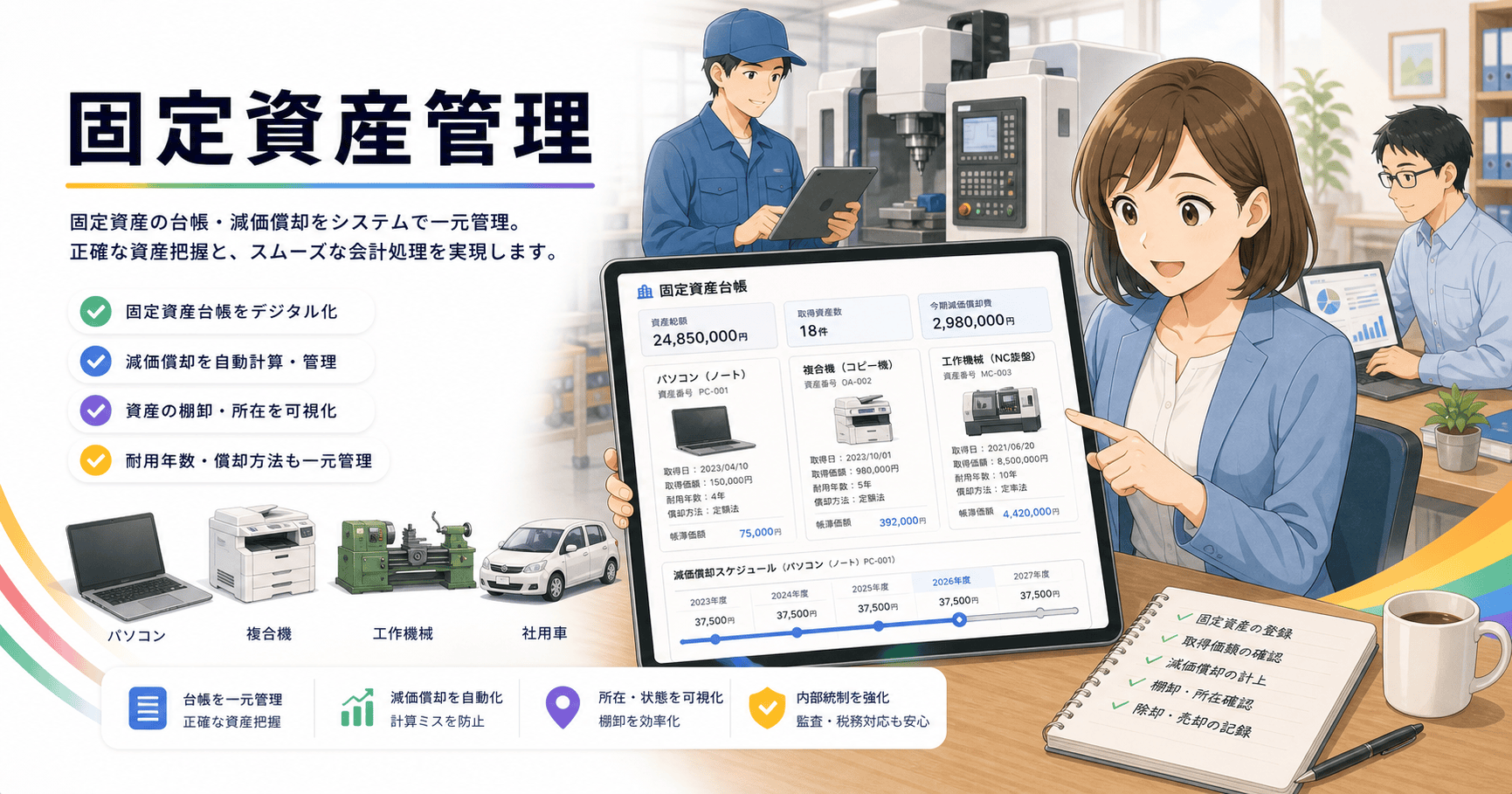
Fixed asset management tends to become person-dependent because, in many cases, useful lives and depreciation methods are individually determined for each acquisition, and ledgers are manually updated using spreadsheet software. The starting point for organization is to first list all currently held fixed assets and confirm that basic information such as acquisition date, acquisition cost, useful life, and depreciation method are recorded without omission. It is also important to note that older assets tend to have more ambiguous records. Ledgers that have not been updated for many years tend to take more time for this initial inventory.
To maintain the accuracy of the ledger, it is crucial to enforce a rule of prompt registration upon asset acquisition and avoid operations where updates are batched at month-end or fiscal year-end. If there are assets subject to bulk depreciation for small-value assets or special depreciation methods, documenting the judgment criteria will ensure consistent processing even if the person in charge changes. Since processing omissions are also likely to occur when assets are disposed of or sold, it is advisable to establish a process for updating the ledger at the time of asset transfer. Creating a system where the purchasing department and accounting department collaborate can reduce registration omissions themselves.
If the depreciation calculation of the ledger and the system are linked, the effort required to calculate depreciation expenses each period and prepare documents for fixed asset tax declarations can be significantly reduced. Providing opportunities for periodic inventory reconciliation between physical assets and the ledger is also useful for detecting omissions and duplicate registrations. The steady accumulation of maintenance leads to both a reduction in the burden of closing operations and accurate asset management. During periods of high capital investment, ledger updates are particularly prone to delays, so it is desirable to make a conscious effort to check them during busy periods.
Frequently Asked Questions
Q. What are the initial challenges that field staff often encounter when implementing "Systematizing the management of fixed assets and depreciation" in-house?
A. The main reason is that on-site business flows and input/sharing rules vary from person to person. First, we start by inventorying current practices and establishing common rules. Specifically, it is important to proceed by emphasizing "recording acquisition information without omission."
Q. What are the key points and methods for smoothly integrating it into your company's operations?
A. Instead of attempting a company-wide, simultaneous change, conduct a trial operation in a single business or department with a small scope of impact, and share the success stories. Register promptly upon acquisition or transfer, and periodically reconcile physical assets with the ledger.
Inquiries / Consultations
First, let's list your owned assets and check if there are any omissions in the basic information in the ledger.


