
Key Points of This Article
- Organize transaction categories into four: taxable, non-taxable, exempt, and non-subject to tax.
- Distinguish between 'business exemption' and 'export exemption' as separate entities.
- Refine the judgment of the four categories and tax rates into a single table.
Quick Summary
- Organize transaction categories into four: taxable, non-taxable, exempt, and non-subject to tax.
- Distinguish between 'business exemption' and 'export exemption' as separate entities.
- Refine the judgment of the four categories and tax rates into a single table.
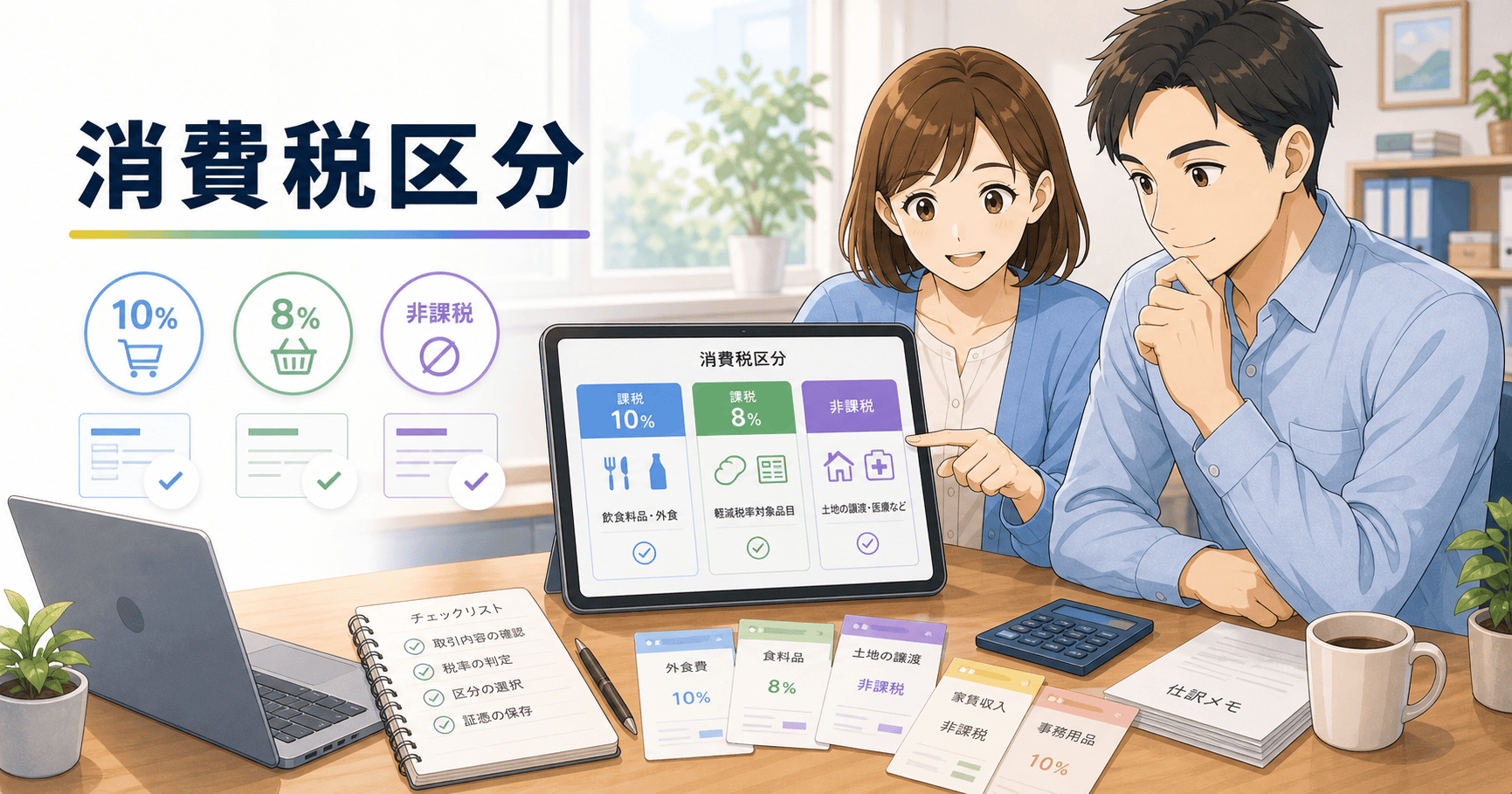
Common pitfalls include judging transaction categories and tax rate categories for transactions where standard and reduced tax rates are mixed. First, organize transaction categories into four: 'taxable, non-taxable, exempt, and non-subject to tax (out of scope of taxation)'. 'Taxable' refers to normal domestic sales, 'non-taxable' refers to transactions stipulated by law such as land transfers, residential rents, and interest, and 'exempt' refers to transactions where consumption tax is exempted, such as export transactions. 'Non-subject to tax' refers to items that are not subject to consumption tax in the first place, such as salary payments, overseas transactions, donations, and received dividends. It is important to note here that 'business exemption,' where tax-exempt businesses are exempted from tax payment, and 'export exemption' for export transactions are completely different matters, and confusing the two can easily lead to errors in ledger classification.
In practice, identifying frequently occurring transaction patterns within your company and creating a table that shows which of these four categories and tax rates each falls into will serve as a foundation. If you encounter a transaction that is difficult to judge, do not process it as a stopgap measure; instead, update the table while recording the basis for your judgment. Since export transactions and overseas transactions are handled differently from domestic transactions, it is advisable to individually confirm and organize whether they fall under 'exempt' or 'non-subject to tax' for peace of mind. After the introduction of the invoice system, the application of input tax credit is linked to the details on the invoice and whether the issuer is a qualified invoice issuer, so it is necessary to develop a habit of checking this in conjunction with classification accounting.
To maintain accuracy, periodically (monthly or quarterly) sample-check for errors in classification judgments. If an error is found, review why that judgment was made and reflect it in the table to prevent recurrence of the same error. Start by creating a single table that categorizes your company's main transactions into the four categories, and then add any confusing transactions and their reasons. This will significantly lighten the burden during financial closing and tax filing. The more the types of transactions increase, the more frequently you should review this table to minimize inconsistencies in judgment.
Frequently Asked Questions
Q. When implementing 'Key Points for Accurate Consumption Tax Classification Accounting' in-house, what are the initial challenges that the on-site staff typically face?
A. The main reason is that on-site workflow, input, and sharing rules vary from person to person. First, inventory the current methods and start by establishing common rules. Specifically, it is important to proceed by emphasizing the point: 'Organize transaction categories into four: taxable, non-taxable, exempt, and non-subject to tax.'
Q. What are the key points and methods for smoothly establishing this in your company's operations?
A. Instead of trying to implement a company-wide change all at once, conduct a trial run in one operation or department with a small scope of impact, and share the success story. Distinguish between 'business exemption' and 'export exemption' as separate entities. Also, refine the judgment of the four categories and tax rates into a single table.
Contact Us / Consultation
Create a single table categorizing your company's main transactions into the four categories: taxable, non-taxable, exempt, and non-subject to tax, and add any confusing transactions and their reasons.


